
Public service is about steady work and shared progress. While no accomplishment is achieved alone, I’m proud to have worked alongside colleagues, town staff, and residents to help move several important initiatives forward.
Since my first campaign, I have prioritized transparancy, accountability, and ensuring tax payers receive a strong return on their investment. The following highlights reflect some of the progress our community has made together.
Annual Town Report
The Town of Clinton’s fiscal year runs July 1 through June 30, and once the fiscal year closes, the town accountant and town treasurer “close out” the books. Once this has been completed, the Annual Town Report can be made available to the public. This has not always been the case.
Prior to my serving on the Select Board, the Annual Town Report had been published just four times between FY2010 and FY2019. Since being elected to the Select Board in 2020, the Annual Town Report has been published every year.
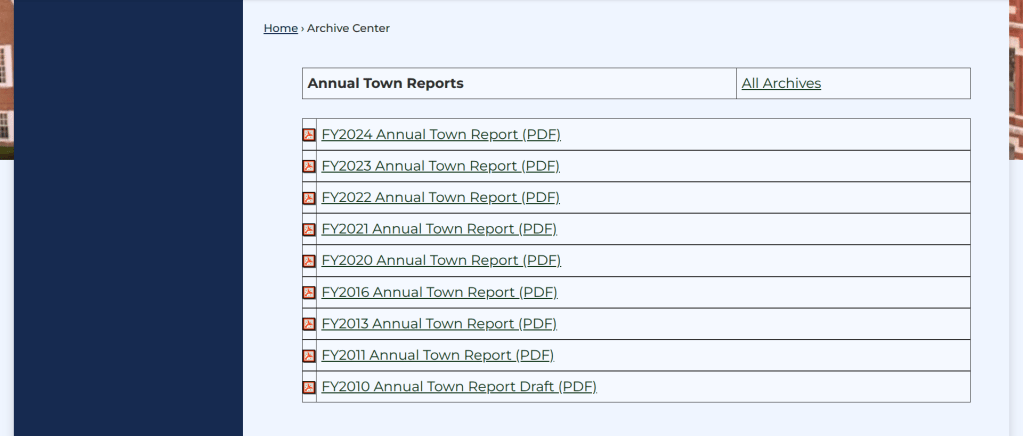
Why does this matter? The Annual Town Report provides the taxpayers with the financial information required to fund the Town of Clinton’s operation during that fiscal year. The Annual Town Report for Fiscal Year 2025 (operations during July 1, 2024 – June 30, 2025) is being assembled and will be available this spring.
Annual Town Warrant Audit
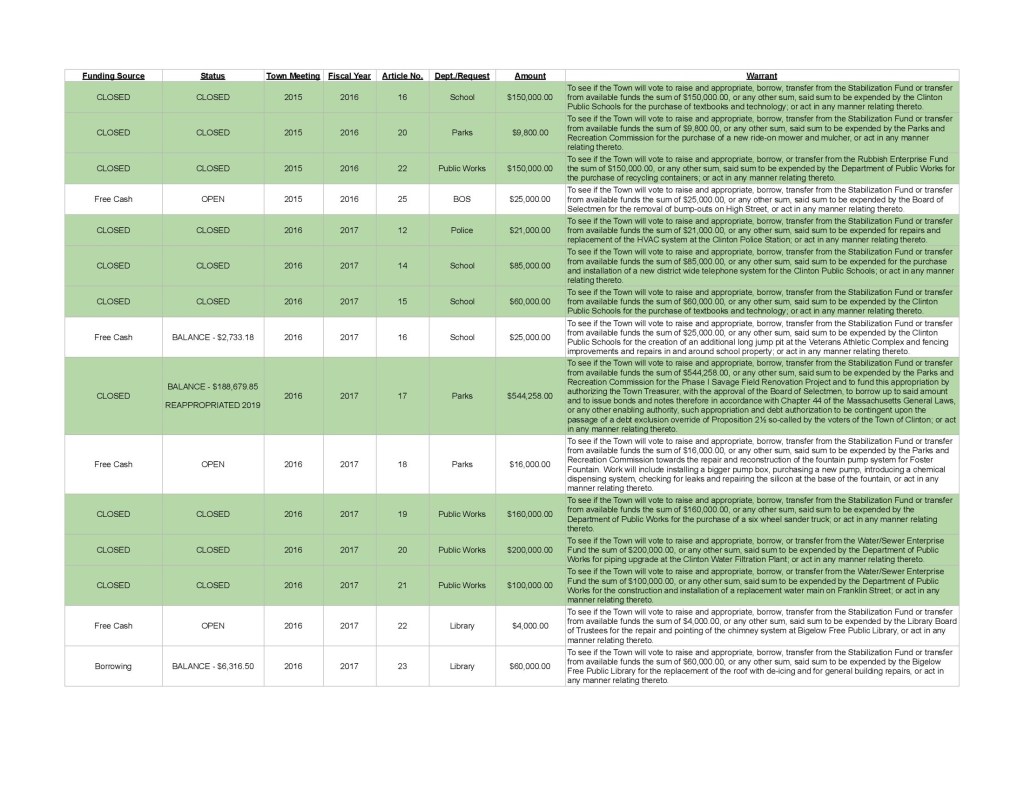
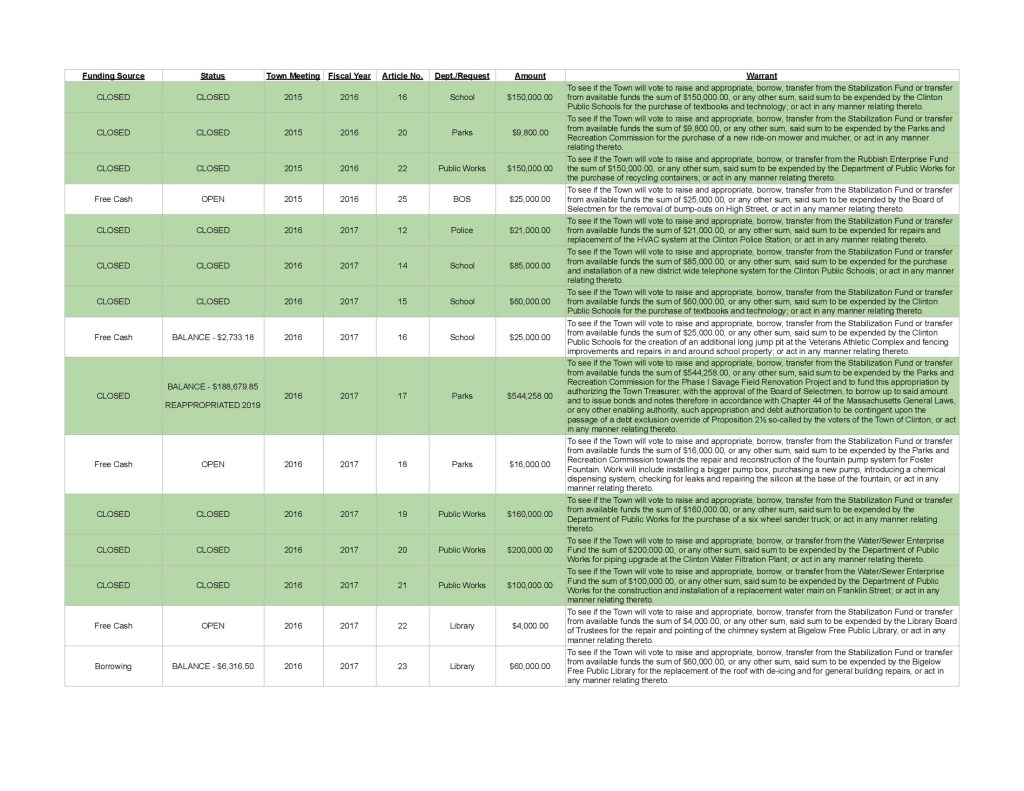
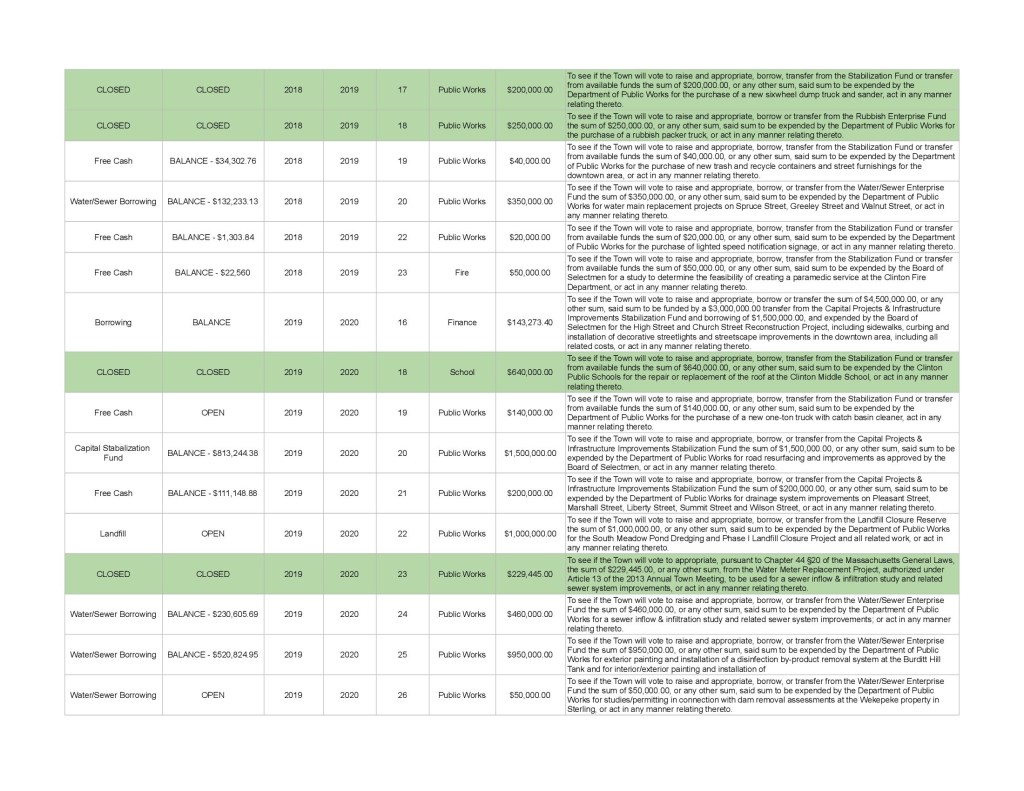
Each year at the Annual Town Meeting held the first Monday in June, town departments will put forth warrant articles for the voters to act on. The articles may consist of spending, such as purchasing equipment and funding a project, or bylaws, such as regulations on having livestock. The articles I focused on were related to spending.
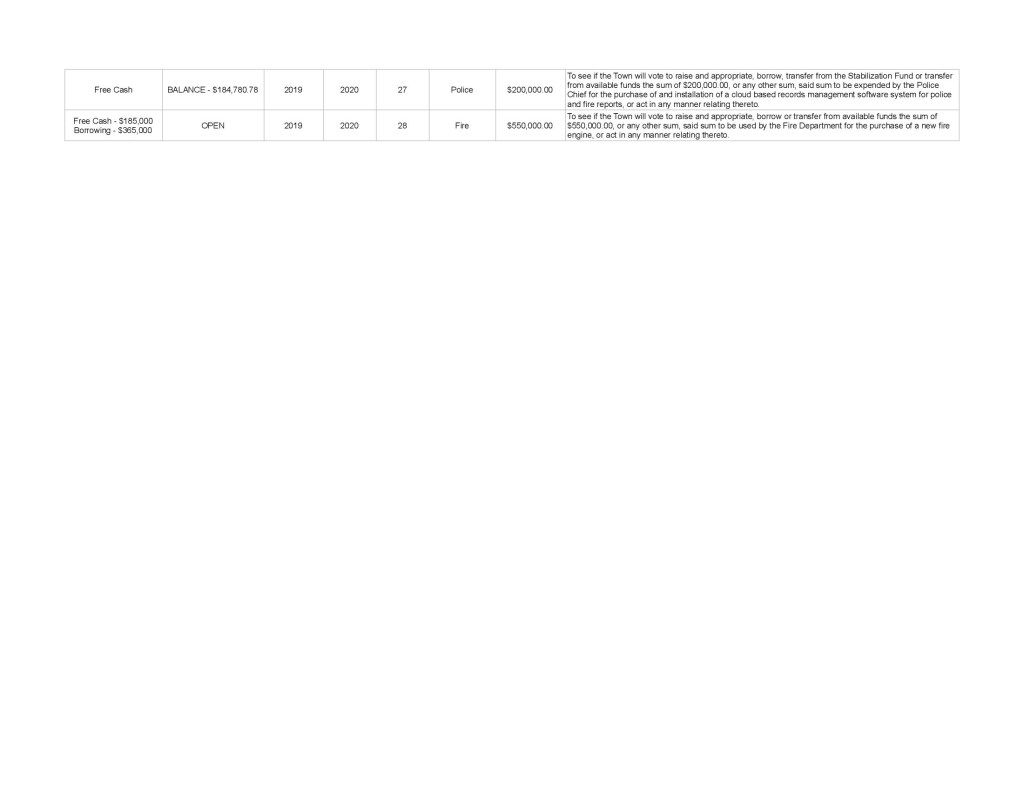
Below is the actual audit I completed in 2020, which contained my findings and recommendations. This lead to departments working with the Town Accountant to close out items that were deemed completed, significantly decreasing the amount of carry over that was being tracked annually.
In 2021, I completed a second audit and found that a significant number of warrant articles had been closed and rectified after a process was established and implemented. Furthermore, this allowed for any left over funding to be reallocated to other projects within the department. For example, there was approximately $11K remaining from a previous project at the fire station that was reallocated to a project involving window replacements.
Fire Prevention Officer
Over the course of several years, Fire Chief Lutes urged the Finanance Committee and Select Board to support the creation of a postion to assist with conducting fire inspections. At the time, Chief Lutes was handling the majority of inspections, which were impossible to keep up with. On top of the annual inspections, new development required on-going inspections. Many communities have a Fire Prevention Officer (FPO) to handle inspections, and many have one FPO to handle the residential side and one FPO to handle the commercial/industrial side.
At a budget subcommittee meeting, the Finance Committee was leaning towards not funding the FPO position for the requested amount of up to $125K. We compromised and funded the position at $70K. Unfortunately, we were still unable to fill the position. Last spring, the Finance Committee increased the funding to $85K, and I am happy to share that this position will be starting on Monday, March 9th. Clinton will have a dedicated full time FPO.
ePermitting Software
In speaking with the Town of Clinton’s Electrical Inspector, there was a strong recommendation for Clinton to explore ePermitting software for inspectional services. The ePermitting software was being utilized by many municipalities surrounding Clinton, and would provide significant value to the town. Not only would the permitting process become online, but it allows for the inspectors to communicate with both the property owners and contractors simultaneously and seemlessly when it came to passing or failing inspections. Furthermore, all of the documentation would be held in the cloud, including address information. This will significantly decrease both call volume and foot traffic for the departments, and make it much more efficient for both the property owners and town employees.
 KOBUS FOR CLINTON